KAMU Station News

Autism Represented: Carl the Collector on PBS KIDS

This November on PBS KIDS, viewers will meet Carl, a warm-hearted raccoon who loves his friends and family. With a passion for collecting things and a knack for unique ideas, Carl is detail-oriented and embraces his identity on the autism spectrum. For the first time, PBS KIDS is introducing a show featuring central characters with the neurodevelopmental condition. KAMU is proud to air the show starting Nov. 14.

“Carl the Collector” showcases and celebrates differences, teaching children ages 4-8 that we all have something unique to offer. Parents: you can expect relatable stories, characters and messages for your kids. Producers say every viewer will see parts of themselves or someone they know in the show.

What does representation like this in mass media signify? We asked a Texas A&M student who has autism and a university staff member who works with autistic students for their perspectives ahead of the show’s debut.

Why is Autism Representation Important?

According to the Centers for Disease Control and Prevention, 1 in 36 American children are diagnosed with autism.

“There’s a lot of diversity within autism,” said Joshua Page, an access coordinator for the Texas A&M Department of Disability Resources who also leads the department’s Spectrum in Aggieland initiative. “The more we show different people – or in this case, animals – with autism, the more exposure people have to what that condition is like and what it might be like to work or be friends with someone with autism.”

Autism is not one specific set of symptoms — it’s a variety of different experiences. It can affect how individuals communicate, interact and perceive their surroundings.

“It’s really hard to characterize autism in a way that’s fair to everyone,” said Audrey Schabel, a Texas A&M senior who has autism. “Just because you’ve met one autistic person doesn’t mean you’re ever going to meet someone else like them again.”

There is a history of autism portrayal in mass media, but Page says it hasn’t truly been representative, focusing mostly on white men and autistic savants. The CDC says autism is less prevalent among white children than other racial and ethnic groups, and Page says only about 10% of the autistic population have savant abilities.

“Overrepresentation can be really misleading about the reality of autism,” Page said. “There are all sorts of people that come in all sorts of shapes and sizes, including raccoons like Carl.”

How Can the Show Help Kids Learn About Differences?

The production team behind “Carl the Collector” includes neurodiverse writers, production staff, animators, advisors and voice talent. They developed a set of characters representative of the autism spectrum.

“Differences can be an asset,” Schabel said. “I think the show can help children understand that God made every individual unique and special.”

Carl and his friends from Carl the Collector hang out and play in the front yard.

Carl collects things and is a perfectionist, but his best friend Sheldon is good at connecting people. His other friend Lotta is also autistic but is hypersensitive to sounds, smells and food textures. Other friends include twin bunny sisters trying to define their identities and a hyperactive squirrel with a tree nut allergy. Despite their differences, they come together to play and solve problems in each episode.

Page says talking about autism through stories is a great way to make tough conversations accessible.

“Autism can be tough to talk about,” Page said. “People get stressed talking about autism because they’re afraid they’re going to say the wrong thing or that they’ll offend someone. Having a children’s story with animals makes that more accessible and lowers the barrier so you can have those sorts of conversations.”

What Difference Can Autism Awareness Make?

Page says one of the most important lessons people should learn is that many of the barriers people with autism face are external, environmental barriers, not internal barriers. Whether it’s a noisy or bright space or it’s the way they’re treated by others, external barriers can make life challenging for people with autism.

“The way we treat people affects them, right?” Page said. “When we practice ways of communicating with kindness and clarity, that helps to remove the barriers people with autism may face.”

People with autism sometimes struggle with understanding nuance or context. While kindness and clarity are behaviors we should practice with all people, they can especially affect the autism community.

“Being kind and understanding goes a long way,” Schabel said. “Also, looking for people who aren’t included and welcoming them into your activities is always appreciated.”

How to Watch Carl the Collector

PBS KIDS’ newest show premieres Nov. 14 on TV and streaming platforms. Watch every day at 7:30 a.m. on KAMU or 10 a.m. on our 24/7 PBS KIDS channel (12.3 or Optimum 18). Browse our TV schedule for more information.

Carl and his friends from Carl the Collector ride bicycles.

Or skip the schedule and watch anytime on PBSKIDS.org or the PBS KIDS Video app. Fourteen full-length episodes will be available to stream starting on the kick-off date. Plus, look for new online games about Carl, coming to PBS KIDS Games throughout the rest of the year.

About Texas A&M Disability Resources

The Department of Disability Resources works to achieve an equitable learning environment for students with disabilities. They offer accommodations coordination, evaluation referral, disability-related information, assistive technology services, sign language interpreting, transcription services and more. They can also help with food allergies, dietary restrictions and housing accommodations.

Students who need support can visit the Disability Resources office in Suite 122 of the Student Services Building or email or call the office.

About Spectrum in Aggieland

Texas A&M’s autism support initiative, Spectrum in Aggieland, first began in 2017 to make the university a more accessible place for students with autism. Students find a safe space in the program and receive academic support, learn about campus resources, build social relationships and prepare for future careers.

“I’ve been in the program for my entire college career,” Schabel said. “It’s been helpful. I’ve really appreciated the resources and support it gives autistic students.”

The initiative also focuses on educating faculty and staff about autism so they can better understand and support students. Page says only then can campus truly be a more accessible place for students with autism.

“Making the environment a better place for people with autism means that we all work together,” Page said. “We all have a responsibility to have an education and an understanding about working with people with autism.”

Students who are interested in the program and self-identify as a person with autism, and faculty/staff interested in autism education, can email Joshua Page for more information.

Explore Outer Space with “NOVA: Solar System”

Take a journey across the galaxy and explore fascinating wonders that typically go unnoticed on planets across our solar system. From wandering spatial bodies, to otherworldly volcanoes, this season of “NOVA” is filled with the lesser-known marvels of the solar system. Watch the special mini-series, “NOVA: Solar System,” every Wednesday this month at 8 p.m. or stream afterwards on PBS.org.

“Volcano Worlds,” the third episode of the mini-series, reveals the impact volcanic eruptions have had on planets across the galaxy and how they contribute to planetary atmospheres. In anticipation of the episode, we spoke to Texas A&M geology professor Dr. David Sparks to give us a little more insight into the world of volcanoes.

What is a volcano and how are they formed?

Volcanoes aren’t always the mountains that probably come to mind.

“A volcano is a place where molten rock, or magma, and other gases are released on the surface of a planet,” Dr. Sparks said. “If eruptions are large enough and happen in the same place for a long enough period of time, the solidified material can build up a mountain, which is what most people think of as a volcano.”

On Earth, there are two ways volcanoes can form. When molten rock deep in the earth rises to the crust, it eventually reaches the surface, creating a hotspot. Volcanoes can also form in areas where oceanic plates have sunk beneath one another or beneath a continental plate. This process creates a typical volcanic mountain that builds up.

The amount of time it takes to form a volcano depends on the amount and frequency of its eruptions. Although a single eruption can add several tens of meters of lava and ash to a mountain, it may only happen every 1,000 years.

“It’s thought that Mt. Fuji in Japan began to form about 100,000 years ago to create the mountain we see today, though it hasn’t erupted for hundreds of years,” Dr. Sparks said.

Why do volcanoes erupt?

Dr. Sparks says there are several reasons and each eruption can depend on a variety of factors.

“Sometimes, large eruptions happen because earthquakes can trigger large landslides that open up a path for the magma,” Dr. Sparks said. “If there are dissolved volatiles, such as water, carbon dioxide or sulfur dioxide in the magma, once the magma begins to rise rapidly into cracks, these volatiles come out as bubbles, which accelerate the rise and cause the explosion.”

What about volcanoes in outer space?

You might not think about volcanoes on other planets, but Dr. Sparks says they absolutely exist.

“Volcanic activity occurs – or occurred in the distant past – on other planets for much the same reason as on Earth,” Dr. Sparks said.

And these volcanoes aren’t just limited to hot planets.

“There are many small solid bodies in the very cold outer part of the solar system, like Pluto, that had or still have some volcanic activity,” Dr. Sparks said, “although the surface ‘rock’ is actually ice, and the ‘magma’ is liquid water, methane or nitrogen.”

How do eruptions shape planets?

When a volcano erupts, it covers existing land with lava and ash, creating new rock. However, volcanic activity on Earth mainly occurs in the Ring of Fire and near the boundaries of tectonic plates, so these eruptions are not significant to shaping our world.

As for other planets, Dr. Sparks says “no other place in our solar system has surface water, and few have any atmosphere. In those places volcanic features are preserved for a long time and are the dominant features.”

Dr. Sparks gave us a couple of examples – one of which is pretty familiar to us.

“The Moon is geologically dead now and is covered in volcanic rock formed at least 3.5 billion years ago,” Dr. Sparks said. “[Jupiter’s satellite] Io has great internal heating, because it orbits through Jupiter’s massive gravitational field, so its surface is completely repaved with new lava every one to two million years.”

Wondering what other cosmic phenomenons you’ve been missing out on? Learn more by watching “NOVA: Solar System” every Wednesday this month at 8 p.m. or stream afterwards on PBS.org and don’t miss this week’s episode, “Volcano Worlds,” airing Oct. 16 at 8 p.m.!

Spooky Season is Here! Halloween Programs on KAMU

Editor’s Note: This article was written in October 2024. While many of the listed airdates are no longer accurate, we hope you enjoy learning about these programs, many of which can be streamed on PBS.org or through KAMU Passport.

The annual pilgrimage to Starbucks for pumpkin spice lattes is well underway and Spirit Halloween is open after popping up out of nowhere yet again. That means one thing: fall is here and so is spooky season.

This October, the KAMU-TV schedule lines up perfectly, with several ‘spooky’ programs premiering this month. If you really want to get into the Halloween spirit, check out the drama, history and comedy/horror programs you can expect.

Nightmare Theatre logo

Nightmare Theatre

Sundays at 2 p.m.

New to KAMU and just in time for Halloween: a weekly quirky trip through horror movie history. Baron Mondo Von Doren is a minor demon assigned to inflict misery upon mankind through bad movies. Through irreverent and somewhat cheesy skits, the Baron introduces old horror films with humor, interesting film facts and a pet werewolf sidekick, because why not? Do they treat the films with respect? No, because the Baron says they don’t deserve any respect, but hey, they’re still enjoyable and now you can watch them every Sunday at 2 p.m. on KAMU.

Learn More About Nightmare Theatre

Secrets of the Dead

Secrets of the Dead

Wednesdays at 9 p.m.

If the title isn’t already spooky enough for you, maybe their episode on vampires will be. New episodes of this popular series air every Wednesday this month. The highlight is their Oct. 30 episode: “Field of Vampires.” Learn about the discovery of a skeleton buried in 1650, found with unusual features and burial rituals that have sparked intrigue and debate about ancient vampire folklore. Other episodes this month aren’t quite as chilling, but learn about a musical mystery surrounding Mozart’s sister on Oct. 9, scrolls that haven’t been read in 2,000 years on Oct. 16 and a lost Civil War burial site on Oct. 23.

Learn More About Secrets of the Dead

Castle pictured during Dracula's Hidden Kingdom special.

NATURE: Dracula’s Hidden Kingdom

Wednesday, Oct. 30 at 7 p.m.

You’ve heard of Transylvania but can you place it on a map? “NATURE” takes you to central Romania to explore the untouched land of mystery and mythology. Meet the region’s inhabitants – not vampires, but wildlife – in the special way only “NATURE” can. Lynx, brown bears, storks, bats and some of the world’s biggest wolf packs roam the mountains, forests and crumbling medieval villages abandoned by humans long ago. The vast, quiet forests have never seen a chainsaw. A bloodsucker, maybe, but not a chainsaw.

Learn More About NATURE

The Marlow Murder Club

The Marlow Murder Club

Sundays at 8 p.m. starting Oct. 27

The sound of a gunshot interrupts a peaceful evening and now the hunt is on. Spend your Sunday nights in October and November with this gripping murder mystery based on Robert Thorogood’s popular novel. In this four-part adaptation, an amateur trio of female sleuths and a determined policewoman uncover a series of clues and fend off red herrings to bring a killer to justice. “MASTERPIECE” calls this mystery series ‘cozy’ – an interesting word choice, but one that makes us excited to check this out for ourselves, too.

Learn More About Marlow Murder Club

PBS KIDS Programs

Throughout the month, 5 a.m.-noon on KAMU or anytime on our 24/7 PBS KIDS channel

If you have little ones in your life, or if you’re like the fully-grown author of this article and don’t like spooky/scary shows, keep it lighthearted with Halloween episodes or specials of several PBS KIDS shows, including “Arthur,” “Wild Kratts,” “Cyberchase” and “Molly of Denali.” These episodes air throughout the month but you can browse our TV schedule or our 24/7 PBS KIDS schedule to find specific episodes.


Happy Halloween from KAMU — stay safe!

Politically Overwhelmed? Listen to Inside Political Science!

Editor’s Note: This article was written shortly before the 2024 election. While we’re not currently in election season, “Inside Political Science” is still covering politics, including federal decisions and state legislative updates. We hope you enjoy learning about the podcast and encourage you to listen on your favorite podcast platform.

2024 has been… complicated. This year’s election was already highly polarized and scrutinized before it was turned on its head by an assassination attempt and a candidate swap. And there are still five weeks for more campaign news to unfold before we know who our next president, senators, representatives, state officials and city councilors will be.

If you’re confused by overwhelming news coverage and never-ending campaign ads, “Inside Political Science” is here to provide clarity. This KAMU podcast was launched earlier this year to simplify political concepts and news coverage, cutting through the noise with non-partisan discussions about polling data, policies, the economy, communication strategies and more. The goal? Everyone has a decision to make in November, and while this podcast won’t tell you who to vote for, it will help you make an informed decision when it’s time to cast your ballot.

Read on to see why we think you should listen to “Inside Political Science.” Plus, we’ll highlight some other KAMU election resources as the countdown to Election Day continues.

  1. Inside Political Science
  2. Additional KAMU Election Resources

Inside Political Science: Your Guide to a Complex Election Year

a red white and blue campaign button reading "Inside Political Science" over a background of charts and graphs

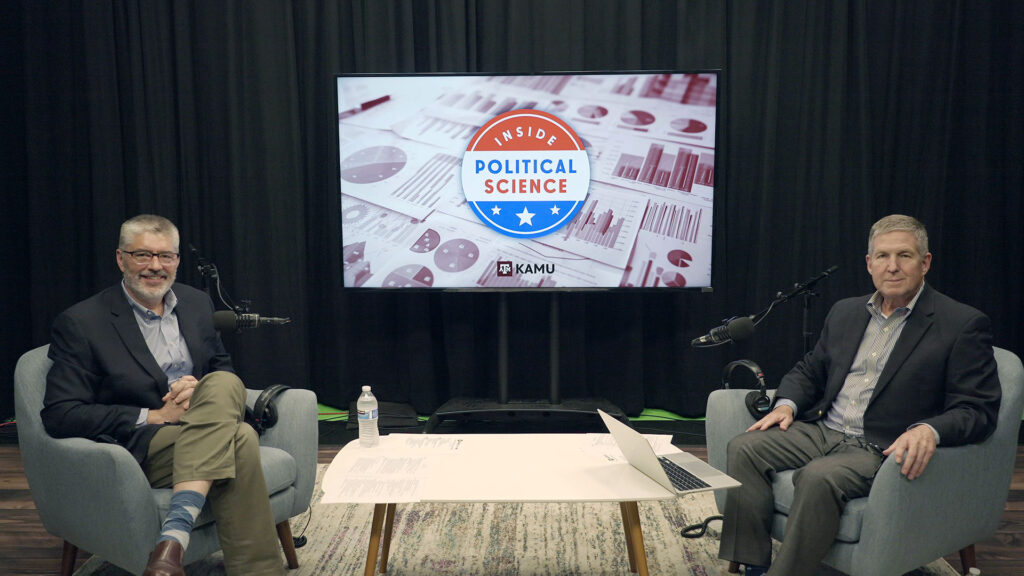
Donald Trump vs. Kamala Harris. This election has been covered in-depth on all mediums by pundits from all over the political spectrum. But there’s more to politics than what they’re covering. Forget views, beliefs and opinions — politics is really a science. And that’s where our hosts Kirby Goidel and Todd Kent come in. They’re political science professors at Texas A&M University.

“Politics is the best unscripted reality TV we have,” Kirby says. “We try to go into more depth than you’re typically going to get on your typical news channel and we’re trying to do more than just provide soundbites.”

Between the two, they have decades of experience in politics, with priceless knowledge about things the public may not always understand, like how polling is conducted and campaigns are run.

“We’re really thinking about politics as opposed to just experiencing it,” Todd says.

What is Inside Political Science?

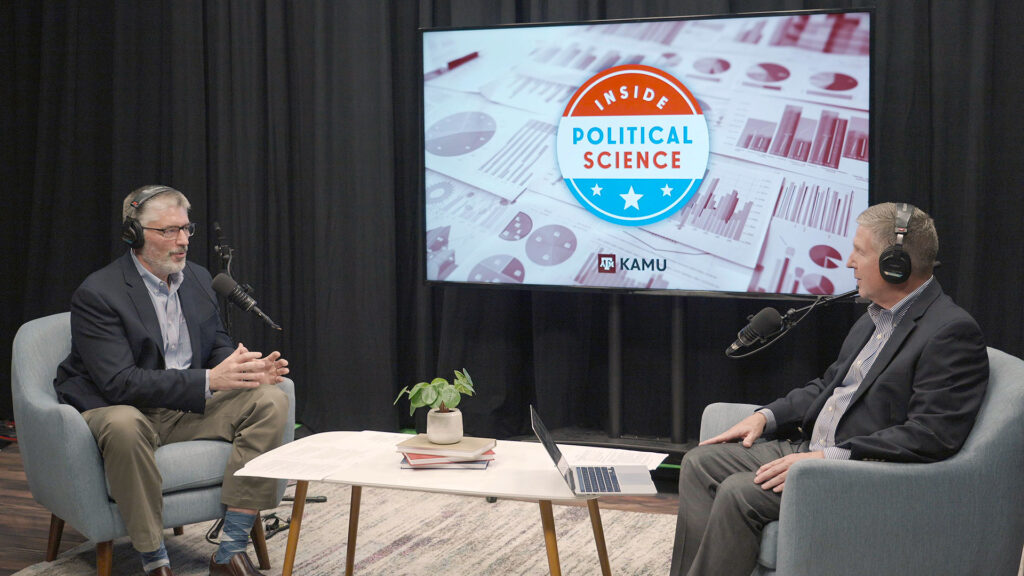
On set of Inside Political Science
Learn something from listening to this podcast? Good! In each 45-minute episode, Kirby and Todd bring their years of expertise and their fascination with politics to lead key discussions about what’s going on in the world. They break down complex behavior into easy-to-understand concepts, bringing high-brow politics down to a digestible level.

“Some podcasts are very good at presenting research but not talking about how it works in the real world,” Kirby says. “Sometimes you have to make the connection beyond the research so that it’s relevant and timely. We want our listeners to understand the real world, informed by that research perspective.”

They share “appetizers” of major moments they’re watching on the campaign trail and dig into larger topics in the “main course” of each episode. They utilize research, data and facts to back up their interpretations of political behavior. Plus, they have a little fun. And when they’re not experts on an important topic, they call on other great experts at Texas A&M and beyond. Guests already featured on the show come from places like UCLA, TCU and Coastal Carolina University.

Past Episodes: 

Who Are the Voices Behind the Mics?

On set of Inside Political Science

Kirby brings years of academic and research experience to the podcast table. He earned a Ph.D. in Political Science from the University of Kentucky. He’s been teaching in Aggieland since 2014 and his research focuses on public opinion, political communications and how institutions influence policy.

“Politics isn’t just my job,” Kirby says. “It’s my hobby. I love to talk about politics. I love to watch politics. I’m reading news and reading about politics. It’s absolutely fascinating.”

Todd’s experience is two-fold: years of practical experience in campaigns and political consulting plus time in international higher education. He’s an Aggie-grad, earning his Ph.D. in Political Science here at A&M, and his research hones in on foreign policy decision-making and political risk-taking.

“They say that you should never talk about politics when you get together with other people, but that’s all I want to talk about,” Todd says. “We may have our personal views, but we can critique what’s going on and make assessments for both sides.”

They can’t always predict everything. But just like you, they’re constantly learning as new things happen in the political world every day.

“There’s real value in being wrong,” Kirby says. “And I’ve been wrong. But I’ve never been unexcited or uninterested in what’s going on, because every time I’m wrong, I’m learning something.”

Who Should Listen?

Dr. Kirby Goidel and Dr. Todd Kent on set of Inside Political Science

Everyone should listen, of course! However, you won’t find reinforcement of what you already believe on this show. Kirby and Todd have more than opinions. If you want clarity before you vote, or if you’re someone who wants to understand why campaigns and candidates are acting certain ways at certain times, this show is for you.

“I tell my students on the first day of class, I hope I’m an equal opportunity offender,” Todd says. “If you’re coming and you expect me to take one side over the other and not really critique what’s going on, then you’re going to be disappointed. And this show is the same way.”

Both hosts say the discussions they have on the show are much like conversations they have with students in their classrooms: authentic and based on evidence.

“If you watch a lot of political shows where they bring in the Republican and the Democrat, they provide talking points for the party,” Kirby says. “But the talking points are removed from evidence. We’re trying to show what’s really going on but also give historical and theoretical context.”

How to Listen to Inside Political Science

New “Inside Political Science” episodes are released every other week on KAMU’s website and popular podcast platforms. Plus, all past episodes are available to stream at any time. The show is likely on your preferred podcast platform – find us and subscribe today!

Listen on our website or any of these platforms:

YouTube Spotify Apple Podcasts iHeart Podcasts NPR App

Additional KAMU Election Resources

“Inside Political Science” is our key, locally-produced resource for the election, but we have several other resources to recommend.

Voting Guides for Students

Text reading "KAMU Student Perspectives" over a background image of students walking in front of the Texas A&M University Academic Building

As part of “KAMU Student Perspectives,” hear from a Texas A&M University student on two important voting topics.

How to Register to Vote

The deadline to register to vote is coming up on Oct. 7. Learn the basics of registering to vote from Brazos County Elections Administrator Trudy Hancock.

Read and Listen Now!

What to Expect When You Go Vote

If it’s your first time voting and you’re a little nervous, Brazos County Elections Administrator Trudy Hancock breaks down what you can expect when you visit the polls.

Read and Listen Now!

PBS and NPR Election Coverage

Watch or listen to trusted election coverage from now through November on KAMU-TV and KAMU-FM. On the TV side, PBS News Hour leads the way with thorough coverage of election news every night. And on Election Night, PBS offers seven hours of coverage, starting at 5 p.m., live on KAMU.

Your favorite NPR news programs like “Morning Edition,” “All Things Considered” and more also have all things election covered. Expect analysis every day leading up to the election. And on Election Night, KAMU-FM brings together NPR and Texas Standard for complete coverage of national and state races starting at 7 p.m.

PBS KIDS Get Out the Vote

Get a kid’s perspective on voting and why it’s important to vote every time in this special video from “Arthur.”

Spooktacular Halloween Costume Ideas from PBS KIDS

A cool breeze kinda floats through the air and the leaves are sorta turning to autumn’s signature colors. Despite the reality of our extended summer weather, excitement for the fall holidays is certainly upon us. As we approach Halloween, it’s time for your kiddos to start considering this year’s costume or pumpkin carving. 

With Oct. 31 just around the corner, we put together a collection of our favorite PBS KIDS Halloween costume ideas, DIY decorations, activities and more. With so much to create, each project is sure to promise fun for the whole family! 

Costumes

Does your PBS KIDS #1 fan want to dress as one of their favorite characters this year? PBS offers a wide variety of costume templates, including printable masks, “no-sew” outfits and costumes that can be created simply from clothes already in your young one’s closet. Many of the guides include instructional how-to videos and/or graphics to follow. Here are just a few of our favorites!

PBS KIDS Daniel Tiger Halloween Costume
No-Sew Daniel Tiger Costume

PBS KIDS Arthur Halloween Costume
Dress as Your Favorite Character from “Arthur”

PBS KIDS Wild Kratts Halloween Costume
No-Sew Wild Kratts Costume


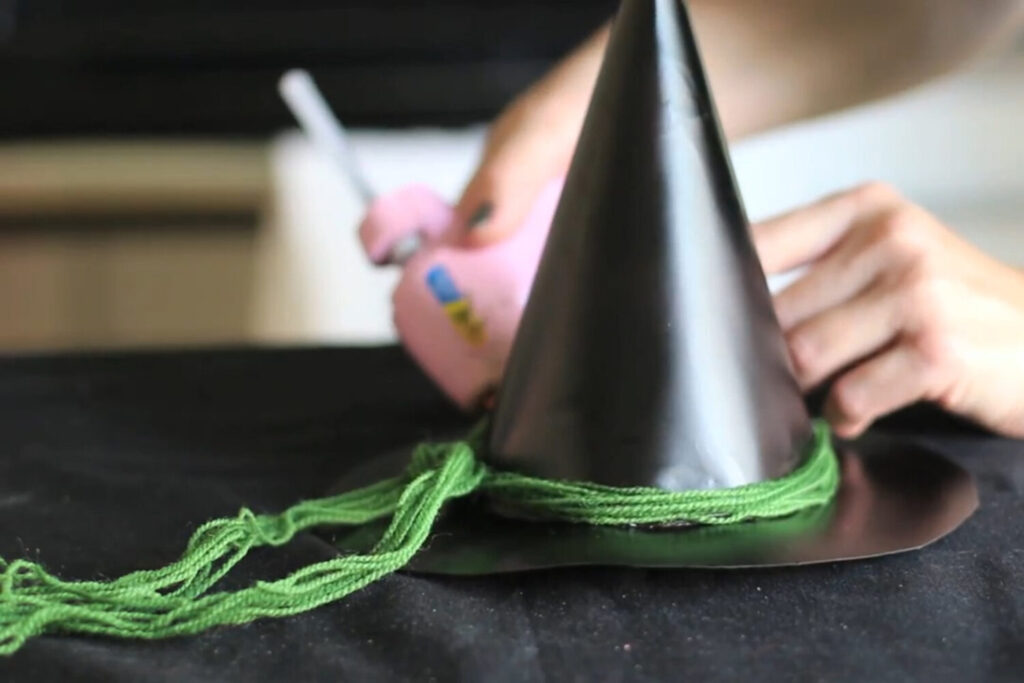
Not feeling like a full costume? There are also guides for creating your own witch hat or templates for printable PBS KIDS character masks.

DIY Witch Hat
Make Your Own Witch Hat

PBS KIDS Nature Cat Halloween Mask
PBS KIDS Character Masks

Activities

While dressing up is a staple around Halloween time, PBS KIDS has tons of additional activities that are perfect for celebrating the spooky season. Many of these projects can be completed with supplies you may already have around your home. So get out your glue and scissors and head to your favorite arts and crafts space, because it’s time to get creative!  


Decorations

Want to spruce up your home with some DIY decor? Check out these projects that are perfect for the whole family.

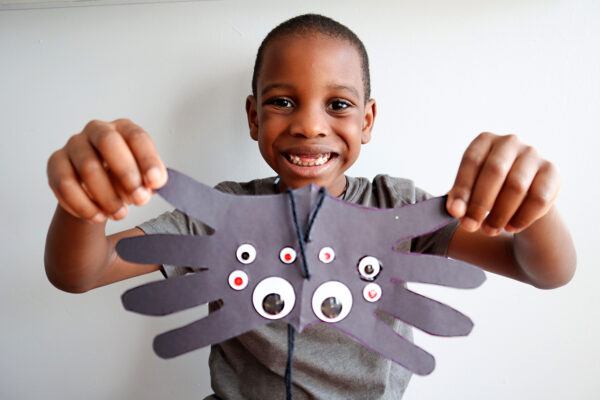
Handprint Spider Craft
Handprint Hanging Spider

Bat Halloween Treat Holders
Bat Treat Holders

Halloween flower pots
Halloween Character Painted Pots


Pumpkin Carving

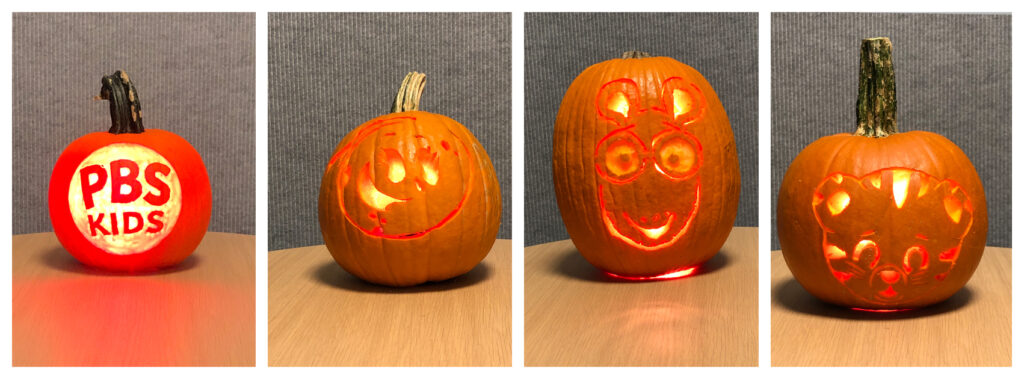
One of the most popular Halloween pastimes is pumpkin carving! But sometimes coming up with your own design can be tough. Luckily, there are plenty of PBS KIDS templates available to give your family some inspiration for this year’s jack-o-lantern.

PBS KIDS Pumpkin Carving Templates

These designs may be a little tricky to carve out, so this family activity will require some adult supervision along the way. Visit this link for the full list of carving templates.


Online Games

PBS KIDS offers many online educational games for your young ones. This Halloween season, help Arthur and his friends as they mix and match puzzles to collect as much candy as possible before trick-or-treat time runs out. Plus, practice problem solving skills and help Elmo, Abby Cadabby and Daniel Tiger pick out their costumes.


PBS LearningMedia

PBS KIDS is passionate about providing a fun educational environment for your young learners all year long. This year, PreK-2 students can celebrate the season with Halloween-themed educational videos, activities and lesson plans. They can join characters like Sid the Science Kid, Nature Cat and the Wombats from “Work It Out Wombats” in a spooktacular learning adventure.

Interested in more PBS LearningMedia? Read this article for a full list of activities for students PreK-12.


KAMU wishes you a wonderful fall season and Halloween celebration! Be sure to visit our Community Calendar to join us at our upcoming events this autumn.

Want some more Halloween inspiration? Click this link for a full list of PBS KIDS Halloween activities. Or check out our TV Schedule for when you can watch Halloween-themed PBS KIDS episodes all season long.

Preparing for Election Day – What You Should Know Ahead of Time

For some people who have never visited the polls, it can be an intimidating process. But don’t worry! Student media producer Hannah Morris met with Brazos County Elections Administrator Trudy Hancock. In an audio-only episode, Hancock went through the step-by-step process for what you can expect when you visit the polls.

Listen to the story:


Additional Information

Before entering the polling station, you must be sure you are registered in the county you want to vote in. For more information on this, visit this article and listen to another audio story with Hancock as she discusses the basics of voter registration.

You must have an acceptable form of identification before voting. Visit this website for an in-depth description of what forms of ID can be used to vote.

Brazos County is expected to have over 20 voting locations available for the 2024 election, according to Hancock. Follow brazosvotes.org to stay up to date on where you can vote.

Before leaving to vote, be sure you are dressed comfortably. November elections typically have the highest turnout, which can sometimes result in long wait times.

Brazos County uses direct-record electronic machines at all voting locations. Listen to the audio story above to hear a step-by-step explanation of how to use the voting machines.

2024 Texas Election Timeline

Last day to register to vote in Texas: Monday, Oct. 7

First day of early voting in Texas: Monday, Oct. 21

Last day to apply for mail-in ballot in Texas: Friday, Oct. 25

General Election Day is Tuesday, Nov. 5


For more information on Brazos County elections, sample ballots or even demonstration videos, visit brazosvotes.org.

Preparing for Election Day – Registering to Vote

Voting can be a nerve-wracking process for those who haven’t done it before. With many rules and expectations to learn, many may see these obstacles as reasons not to vote. However, KAMU is here to make sure you feel prepared come Election Day.

Student media producer Hannah Morris talked with Trudy Hancock, Brazos County’s Elections Administrator. They chatted about what people need to know to register to vote, including how to change addresses and what timelines to be aware of.

Listen to the story:


Nervous about what to expect on election day? Hannah has another episode with Trudy Hancock that includes a step-by-step description of the voting process. Visit this article to learn more.

Additional Information

Have some more questions before election day? Here are some more helpful resources:

How to register to vote in Brazos County

To vote in Brazos County, you must be registered here. There are many ways to either register to vote or to check your registration status.

To register to vote you can do any of the following:

  • Complete the SOS Online Voter Registration Application
    • This application is through the Texas Secretary of State office. After answering a series of questions, you will fill out the entirety of the application. After selecting “submit,” a screen will pop up for you to print out the application. After this, you will sign and then mail the application. Unfortunately, failure to sign and mail in your application will result in your application being voided. 
  • Request a printed application
    • If you do not have access to a printer, the Secretary of State office has paper applications available. You will fill out the request form on their website and a postage-paid application will be mailed to your address. After completing the application, you will mail it back to the office.
  • Contact or visit the elections administration office to complete your voter registration
    • Our Brazos County Elections Administration office is located at: 300 E William J Bryan Parkway, Suite 100, Bryan, TX 77803
    • Call at (979) 361-5770
  • Register when renewing your driver’s license

How to update your information

You can visit this website from the Secretary of State office to update your voter registration information. Possible updates include your residential address or changing your name. Note: you will need your Voter Unique Identifier to log in. For more information visit votetexas.gov
2024 Texas Election Timeline

Last day to register to vote: Monday, Oct. 7

First day of early voting: Monday, Oct. 21

Last day to apply for a mail-in ballot: Friday, Oct. 25

General Election Day: Tuesday, Nov. 5

Celebrating 50 Years of Austin City Limits

Editor’s Note: This article covers the 50th season of ACL, which ran from Fall 2024 to Spring 2025. While the article and its listed airtimes are out of date, we hope you still enjoy learning about the 50th season of such an iconic program. 

Willie Nelson and B.B. King. Kacey Musgraves and Chris Stapleton. For half a century, some of music’s biggest names have performed on television’s most famous stage. From Rockabilly to R&B to classic Country, Austin City Limits’ presentation of eclectic sounds has made it one of the most popular live music programs on TV for almost 50 years.

To celebrate the upcoming 50th season of ACL, we decided to take a trip back (way, way back) to the show’s first season. So throw on your dancing boots and your best concert attire as we walk down memory lane of this historic PBS program. And don’t forget to watch Season 50 of ACL when it airs Saturdays at 10 p.m. starting Sept. 28.

The Pilot

In 1974, show producer Paul Bosner and his team were seeking ways to answer a call from PBS for more original TV programming. Settled in the heart of Downtown Austin, KLRN (now KLRU-TV) started brainstorming ways they could showcase the unique sounds and growing music scene of their city. Little did they know the plan they were hatching up would contribute to Austin eventually becoming the “Live Music Capital of the World.”

Fun Fact: The name of the show was created by Bosner, who saw the “Austin City Limits” road sign when he commuted into town for work every week.

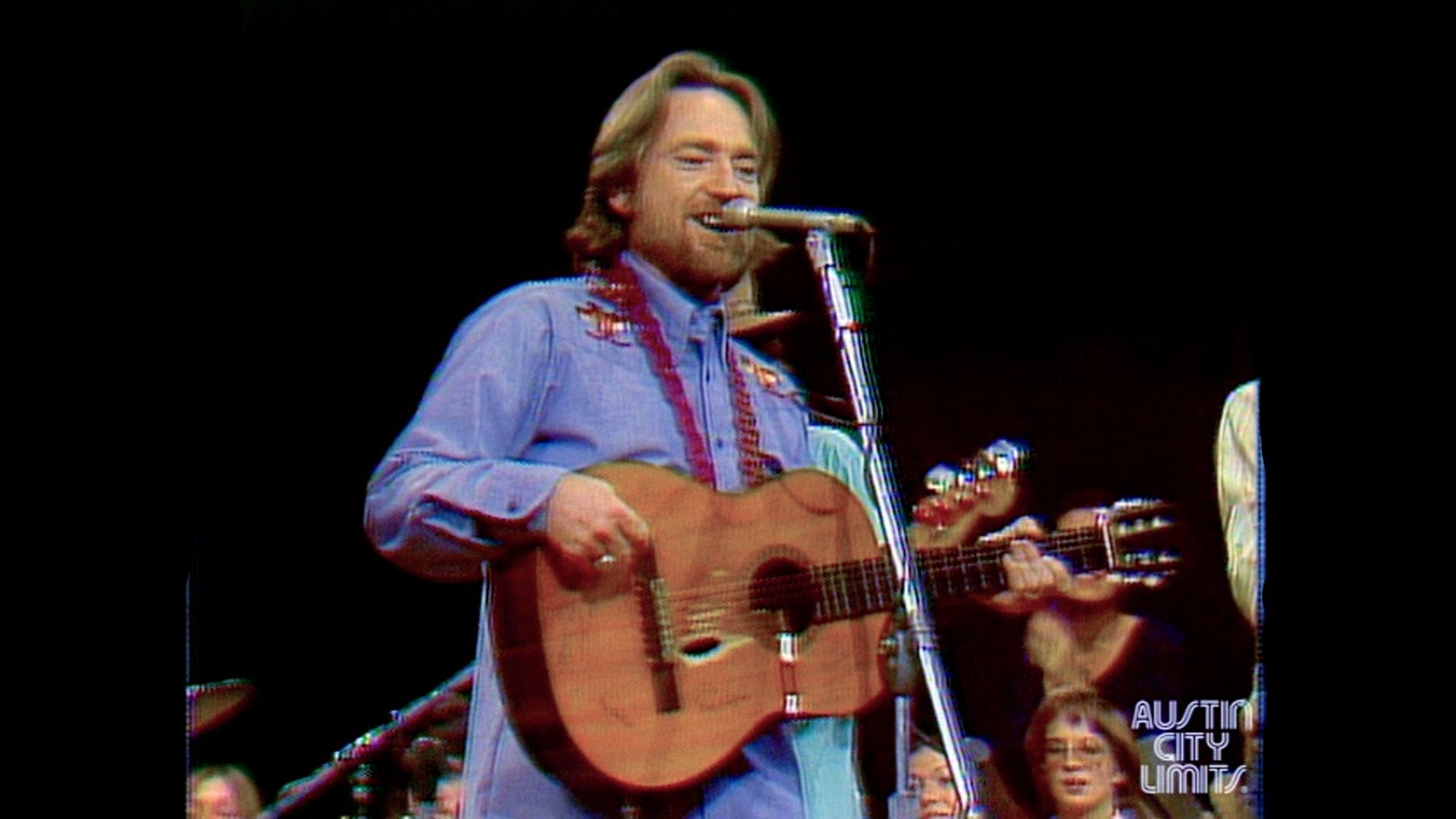
Once the show was pitched and approved, the stage was set and the amps were… amped. The ACL crew taped their pilot episode on Oct. 17, 1974, which featured a performance from Texas-native Willie Nelson. The show started with its still-iconic progression of opening shots taken from around Austin. When Nelson took the stage, it seems only fitting that he opened the historic show with his popular song “Whiskey River.”

Willie Nelson on pilot episode of Austin City Limits

Fun Fact: Artist B.W. Stevenson performed the night before Nelson and was originally intended to be featured on the show’s pilot episode. But when the tape turned out bad, the KLRN team decided to go with Nelson’s performance as the show’s premiere. Was this fate? Could we truly imagine anyone other than Willie Nelson being the first performer on television’s most celebrated stage?

Originally planned as a TV special for an Austin PBS fundraiser, the KLRN team witnessed the success of the episode and pitched ACL as a recurring series. With that, 50 years of music history was born. 

Want to watch history being made? Click this link to watch Willie Nelson in the pilot episode of ACL from 1974.

Fun Fact: Willie Nelson and his family are hosting a celebratory 50th birthday bash for ACL on Oct. 17, 2024 – exactly 50 years to the day of the pilot’s taping. Joined by Asleep at the Wheel, the group is set to perform at Austin’s Long Center for the Performing Arts. 

Season 1 and On

Once the series was picked up by PBS stations across the country, the KLRN team produced the rest of ACL’s first season. Performers included Asleep at the Wheel, Jerry Jeff Walker, the Charlie Daniels Band and even a rare TV appearance from singer-songwriter Townes Van Zandt.

As time passed, ACL expanded its performance genres. Welcoming new faces and old friends, the show thrives on showcasing a variety of sounds that exemplify its home city. 

Jimmy Buffett performing on Austin City Limits
Jimmy Buffett performing on Season 2 of ACL – 1977

B.B. King performing on Austin City Limits
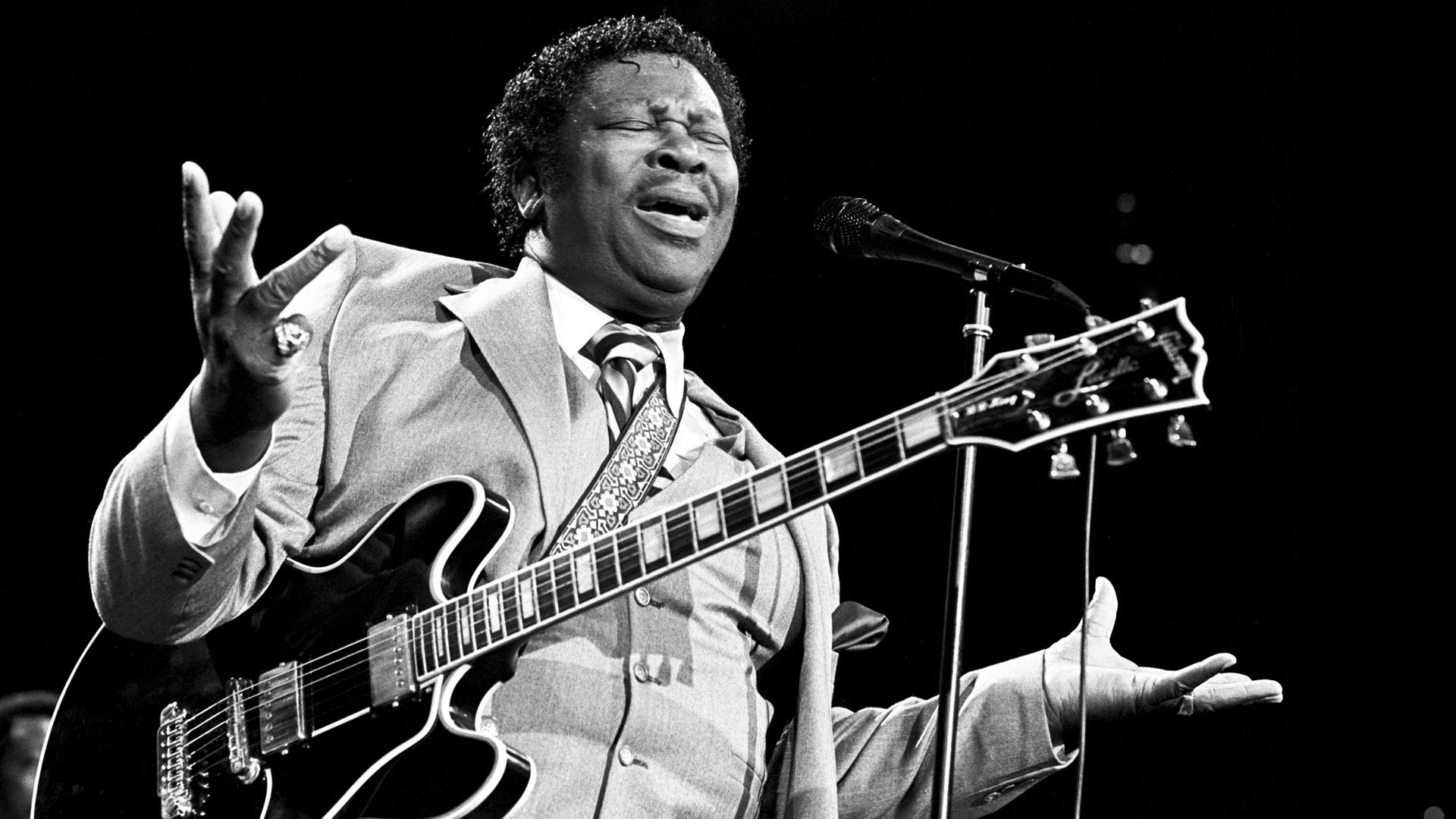
B.B. King performing on Season 8 of ACL – 1983

Emmylou Harris performing on Austin City Limits
Emmylou Harris performing on Season 7 of ACL – 1982

Johnny Cash and June Carter Cash on Austin City Limits
Johnny Cash and June Carter Cash on set of ACL – 1987

Dolly Parton performing on Austin City Limits
Dolly Parton performing on Season 20 of ACL – 2000

Pearl Jam performing on Austin City Limits
Pearl Jam performing on Season 35 of ACL – 2009

Kendrick Lamar performing on Austin City Limits
Kendrick Lamar performing on Season 41 of ACL – 2015

Molly Tuttle & Golden Highway performing on Austin City Limits
Molly Tuttle & Golden Highway performing on Season 49 of ACL –  2023

Looking Forward

After half a century of music history in the making, ACL Season 50 looks to the future while staying true to its past. This anniversary season spans the confines of genre, featuring a mixture of folk, rock, soul and country performances. 

Austin City Limits Celebrates 50 Years airs Friday, April 4

Leading up to this commemorative season, Austin City Limits put together its own trip down memory lane that may feature one of your favorite artists. Watch the video below!

Watch Season 50 of ACL Saturdays at 10 p.m. starting Sept 28.

“The Truth Is Rarely Simple” – New Drama!

Editor’s Note: “Moonflower Murders” premiered in Fall 2024. This article and the listed airtimes are out of date, but we hope you still enjoy learning about this PBS drama, which can be streamed on KAMU Passport.

Spooky season is right around the corner and a murder mystery is just what you need! Watch KAMU for an all-new drama this Sunday as “Moonflower Murders” premieres at 8 p.m.

What to Expect:

The six-part series based on Anthony Horowitz’s mystery novel picks up on Susan Ryeland’s life after “Magpie Murders,” which aired on KAMU in fall 2022. After cracking the case of ‘the missing chapter,’ Susan has moved to Crete to live and run a hotel with her longtime boyfriend, Andreas. However, her peace is disturbed when an unsolved murder resurfaces and those close to her seem to be involved.

Watch the trailer now!

Characters from Moonflower Murders drive an old red car down a road.

About the Author:

Anthony Horowitz is a renowned author based in the U.K. Aside from writing over 50 books across a multitude of genres, Horowitz has also written TV series, films and plays. He is widely known for his popular series “Alex Rider” alongside other mystery and suspense novels. His award-winning novel, “Magpie Murders,” was released in 2016 and adapted as a PBS TV series in 2022. After receiving an incredible response to the six-part series, Horowitz decided to partner with “MASTERPIECE” once again to work on bringing his follow-up novel, “Moonflower Murders,” to life.

How to Watch:

“Moonflower Murders” is set to premiere on KAMU on Sunday, Sept. 15 at 8 p.m. New episodes will continue to air every Sunday at 8 p.m. and each episode will be available to stream for free for two weeks after its premiere.

Can’t wait? Passport members can binge all six episodes of “Moonflower Murders” starting Sept. 15 on KAMU Passport.

Magpie Murders Recap:

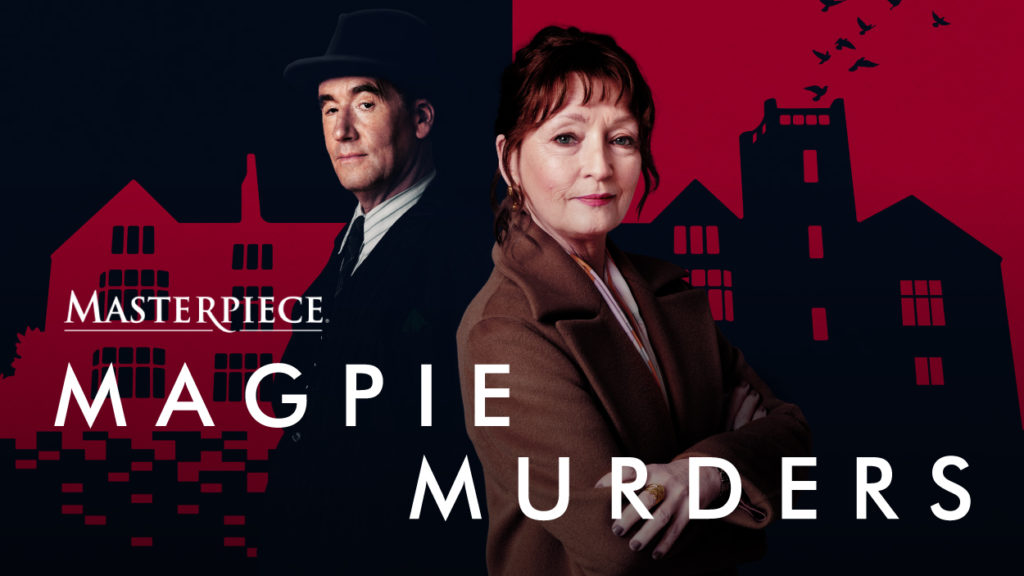
MASTERPIECE - Magpie Murders
Get to know the background of “Moonflower Murders” with its prequel! “Magpie Murders” is a classic whodunit, but with a twist! The story within a story follows editor Susan Ryeland as she uncovers the truth behind author Alan Conway’s mysterious death.

Watch the prequel now on Passport, or catch up with these summaries:

Ep 1: Editor Susan Ryeland is on a quest to find the missing chapter of her mystery author’s latest manuscript. When she learns he’s dead, her search for the last chapter turns into a murder mystery.

Ep 2: The author’s self-inflicted death seems to have been staged. During her search for the original manuscript, Susan wonders if the missing chapter holds the answer as to who killed author Alan Conway.

Ep 3: As Susan begins to decipher clues in the case, problems in her personal life begin to arise. With every lead she finds comes a new, unexpected turn making the murderer much harder to find.

Ep 4: The plot of Alan Conway’s unfinished novel starts to manifest itself in Susan’s life as she and the main character of the novel both attend funerals in hopes of finding a lead.

Ep 5: As the case of the author’s mysterious death begins to unravel, Susan finds out her sister and boyfriend may have been involved somehow. The novel and Susan’s life continue to intertwine as real and fictional suspects are narrowed down.

Ep 6: As Susan continues to find clues, new information comes to light leading her right to the culprit. Susan has finally cracked the case, and the novel is finished, bringing this chapter to an end.

Say Hello to KAMU Donation Days!

Public media stations like KAMU have long relied on the generosity of viewers and listeners to provide quality programming to all ages. The familiar phrase in every show intro – “and viewers like you” – is more than just a catchy slogan; it’s heartfelt acknowledgment of the important role each donation plays. Every time you hear that phrase, remember: it’s not just a nod to a faceless source of dollars, but an appreciative shout-out to you, the local supporter who makes it all possible.

If you follow us on social media, you might’ve noticed a slight change to the way we refer to our TV and Radio Pledge Drives. These days dedicated to special programming and accepting your contributions are now called KAMU Donation Days!

What is a Donation Day?

Since the creation of public broadcasting, generosity from viewers and listeners has allowed stations to reliably deliver high-quality programming that informs, educates and entertains. KAMU-TV/FM is proud to have served as Aggieland’s Public Television and Radio since the 1970s. Your support sustains our full-time crew and our Texas A&M student interns, who gain invaluable experience and knowledge that prepares them to enter the broadcasting and storytelling industries.

How to Give During Donation Days

During KAMU Donation Days, it’s easy to give either at 979-845-5656 or at tx.ag/KAMUDonationDays. Local KAMU employees and volunteers will be ready for your generous call. Be sure to ask them if your pledge is eligible for a special, premium gift!

While Donation Days happen once every few months, you can give ANYTIME! Donate online to KAMU-TV or FM with a few simple clicks.

Support KAMU TV-FM in our mission to inspire, enrich and educate.

Donate Now